Thursday, 19 November 2015
MA Photography - Time - Reflection on Tutorial
Looking back into my research about time in photography I think at least I know what decides the scenes I will capture.
"Kairos is the ancient Greek word meaning the right or opportune moment. He was the god of the fleeting moment, a favourable opportunity opposing the fate of man. Such a moment must be grasped, otherwise the moment is gone and cannot be recaptured."
"In the new testament Kairos means 'the appointed time in the purpose of God, the time when God acts. Seems to be an intermediate time, a moment an undefined measure" from wikipedia
With this research I can draw the conclusion that if I was to photograph for this project, all moments would be decided by me. It would be the times I want to grasp so they are not lost forever. I would simply photograph each moment that I wanted to, everything that needed to be captured. The context for the project must be decided by the project itself. The determined time that the length of the project is before it is handed in in January.
However after this tutorial I feel that my approach is not working, it does not make sense to use this difficult process to try and capture the lost time. There is no relevance. There is no relevance between the process and the concept.
I have decided to bring context and bring some sort of order and sequence to the project I will keep a diary of each time in a day when I am wasting time or time is being wasted around me.
MA Photography - Time - Tutorial with Joanna Lowry
I had my tutorial with Joanna Lowry the head of our MA course at Brighton. She read through my project proposals and thought the "Untitled Kairos C" was the strongest one and agreed that I should follow that one through. I am happy as this was the one I wanted to develop the most really, I guess I can still work on the others in the background.
She gave me many references to look at:
Proust - In Search of Lost Time
Craigie Horsfield
J. H. Engstrom
She asked me difficult questions: why would this be interesting/relevant for the viewer? How does the project capture the idea of lost time? What will you capture? What decides the scenes or the times that you capture?
I couldn't answer these right away, and to be honest I am not at all sure.
MA Photography - Time - Colour Paper, further development
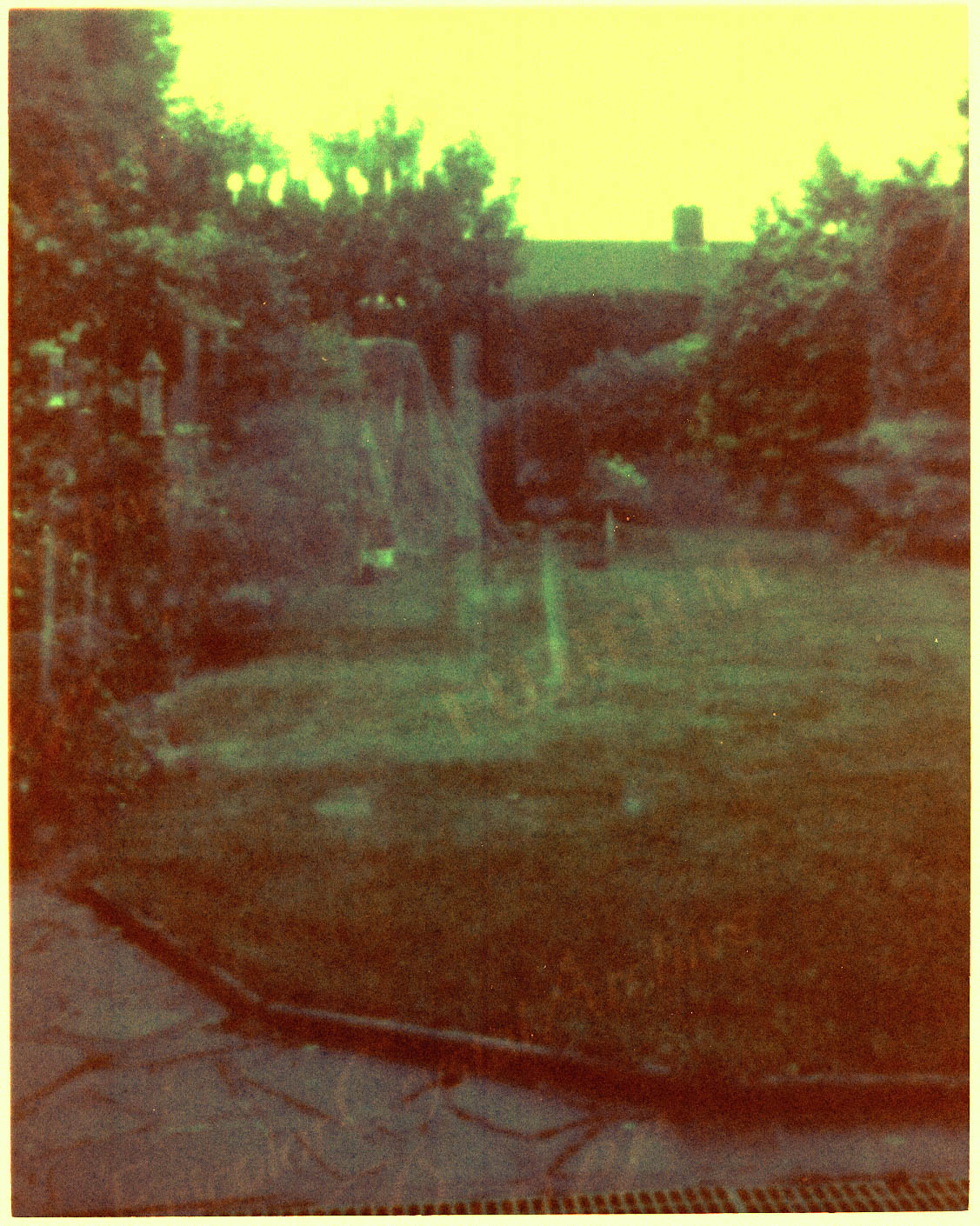
This picture is completely insane, the highlights, that are white, for example the bed and the self are correct, but all the shadows are purple, how insane!
In this picture the whites are okay, the the blue on the cup is close to correct, but the two curtains hanging down are bright orange in real life, it seems crazy that in most areas the colours are correct, but for the curtains the colour is practically inverted.
My theory is that most of the shot is exposed with incandescent light bulbs like that you have in your house, but the curtains have the sunlight coming through and have been captured completely different. Those as i remember, there wasn't a lot of light coming through the window, it was a very overcast day and it was late afternoon with the light fading.
Here it ca be seen my colour corrections are getting closer and closer, the very last photo, its nearly there, not too bad. but a lot of the scans, expecially from interiors, the colours are way off. I cant figure out why some colours in those pictures are close to what they should be, and others are horrendous.
MA Photography - Time - Colour paper, further development
When processing the scans these were some settings I used in the Flexcolour software to correct the colours and get the right levels. They are still way off though, better than my colour papers from April and May but still way off neutral.
MA Photography - Time - Colour Papers Development
I used several blue and cyan filters over the lens, to filter out the blue light and some green light.
These are scans of some of my paper negatives. I took several exposures of each scene, with different filters, these were the most successful I felt.
This is my camera set up:
A wooden 5x4 camera with a Schneider lens
MA Photography - Time - Colour Paper, Fujifilm Crystal Archive
http://www.fujifilm.eu/uploads/tx_ffproducts/files/files/Fujicolor_Crystal_Archive_Paper_2015_01.pdf
To continue working in colour I found this pdf from fujifilms website, about the properties of the paper, to be honest I didn't understand most of it, but the bit that interested me, about the different colour sensitivities to light were these bits:
What they mean, as far as is in my understanding is that the blue and green in the paper are more sensitive to light than red is, I am not sure that the difference in wavelength has an effect on the image. If I managed to find a number of filters that would bring the exposure of blue and green in line with red, whether this difference in wavelength would have an effect.
Subscribe to:
Posts (Atom)